During any soccer match, the term offside is bound to come up, often accompanied by a flurry of confusion. This rule can be perplexing not only for those discovering the sport but also for experienced supporters who find themselves questioning why the assistant referee has raised the flag. To truly appreciate the game, it helps to understand what defines offside in soccer, its purpose, and how both players and officials determine whether an offside offence has occurred.
What does being offside mean in soccer?
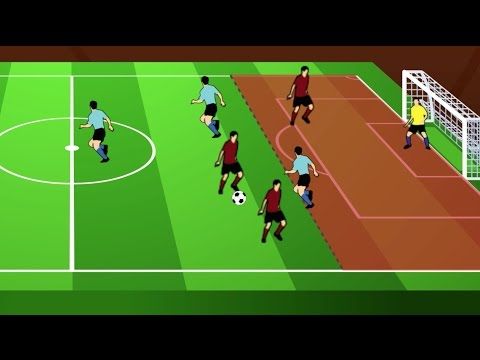
Offside stands as one of the most essential rules shaping attacking and defending tactics throughout a match. It introduces a constant strategic challenge for attackers and serves as a safeguard for defenders, ensuring fairness while discouraging goal-hanging near the opposing net.
A player is considered in an offside position if, at the moment the ball is played/passed to them by a teammate, they are closer to the opponent’s goal line than both the ball and the second-to-last defender. The critical detail here is the precise instant when the ball leaves the passer’s foot—this specific moment is what referees focus on to assess potential infractions.
How do referees judge the offside position?
Referees depend on sharp observation and judgment, supported at the professional level by technology like VAR. Each situation requires attention to the exact instant a possible offside position might occur. For an official decision, the attacker’s placement relative to other players and the ball is carefully scrutinized.
This evaluation looks at whether any part of the attacker’s head, body, or legs (excluding hands and arms) is beyond both the second-to-last defender and the ball. Merely being in such a position is not enough—the player’s involvement in play determines if an offside offence is actually committed.
Key elements of the offside law
The offside rule comes with several nuanced terms, each with specific meaning. Understanding these makes watching matches more enjoyable and clarifies discussions about controversial decisions.
Who counts as the second-to-last defender?
Typically, the second-to-last defender includes the last outfield player along with the goalkeeper, though occasionally two outfielders may be behind the keeper. Offside judgments hinge on their positions, requiring attackers to remain constantly aware of the defensive line.
Defenders sometimes use the offside trap—a collective step forward designed to catch opponents in an offside position. This tactic relies on perfect timing and strong communication within the backline, making it both risky and rewarding if executed well.
Where must an attacker be to be offside?
An attacker can only be ruled offside if positioned in the opponent’s half of the field. Remaining level with either the second-to-last defender or the ball keeps the player safe from a call. Moving ahead of these markers before the pass creates an unfair advantage and is closely monitored by officials.
Being closer to the goal than the defender gives the attacker a significant edge. That’s why every part of the attacker’s body—except hands and arms—is reviewed with great care whenever an offside offence is in question.
When does offside become an offence?
Simply standing in an offside position does not automatically lead to a foul. The law outlines additional requirements based on what the player does after the ball is played forward by a teammate.
Interfering with play and gaining an advantage
Officials look for active involvement, such as touching/playing the ball, interfering with play, or affecting an opponent’s ability to participate. Just lurking behind defenders is not enough; actual engagement is necessary. An intention to play the ball also influences many decisions, demanding quick and accurate assessments from referees.
The clearest cases arise when attackers run onto a through pass, collect the ball, and advance toward goal. Even movements that distract defenders or block their vision can count as interference, leading to an offside offence.
Moments where no offside offence occurs
No offside offence is given if a player receives the ball directly from a throw-in, corner kick, or goal kick. These exceptions keep restarts flowing smoothly and prevent unnecessary interruptions right after set pieces. Knowing these details allows fans to better anticipate and interpret controversial moments during matches.
Referees and assistants must always weigh the sequence, action, and context before signaling an infraction, which explains why some decisions remain hot topics long after the final whistle.
Techniques used to avoid offside
Attackers are always pushing the limits of the offside law by curving runs or holding back until the exact moment the ball is played/passed. Staying alert to the defensive line and anticipating passes enables skilled strikers to time attacks perfectly.
Creating opportunities without breaking the rule takes smart positioning and fast reactions. Teams practice these techniques relentlessly, aiming to break the offside trap and surprise defenders with perfectly timed moves or clever decoys.
- Timing runs so the attacker remains level at the moment the ball is released
- Watching defensive lines instead of the ball alone
- Communicating between midfielders and attackers to coordinate passing and movement
- Bending runs from wide angles to approach onside rather than straight through congested centers
Common misconceptions around offside calls
Mistakes and misunderstandings often happen during fast counterattacks or crowded goalmouth situations. Some believe a player must touch the ball to be guilty of an offside offence, but influencing defenders—even without contact—can be just as important in the eyes of the referee.
Supporters sometimes wonder why offside is not called in seemingly obvious moments, forgetting the exceptions related to certain restarts. Assistant referees face the tough task of judging angle, timing, and exact positions under pressure, which is why occasional errors spark heated debates among fans everywhere.
Frequently asked questions about the offside rule
Can a player be offside in their own half?
No, offside applies only in the opponent’s half. If a player remains on their own side of the pitch at the moment the ball is played/passed, the assistant referee will not signal for offside, regardless of the position of defenders.
- Attacker crosses halfway line after pass: No offside
- Movement started before entering opponent’s half: Still not offside
Which parts of the body count in judging offside?
An offside decision takes into account any part of the body—including the head, body, or legs—that can legally play the ball, but excludes hands and arms. When using VAR, officials focus only on eligible body parts to determine the attacker’s position compared to the second-to-last defender.
| Included | Excluded |
|---|---|
| Head, body, legs | Hands, arms |
Is it possible to be offside if the ball comes directly from a throw-in?
No, receiving the ball straight from a throw-in never results in an offside offence. The same exception exists for goal kicks and corner kicks, which maintains the flow of attacking play and prevents constant interruptions during restarts.
- Throw-ins: No offside
- Goal kicks: No offside
- Corner kicks: No offside
Does intent matter in offside offences?
Yes, intention to play the ball can influence the official’s decision. If an attacker tries to touch the ball or deliberately affects the defenders, referees might penalize based on intention, not just direct contact.
- Intentionally blocking view: Can be considered interference
- Purposeful run towards the ball: Often triggers a call
- No action or influence: Usually not penalized